

Auteur : Susan Paterson – Novembre 2012
MA, VetMB, DVD, DipECVD, MRCVS
History and clinical signs
A two year old West Highland White terrier presented in May with head shaking of two weeks’ duration and a yellow/brown discharge from both ears.
A carefully taken clinical history and dermatological inspection suggested the dog had other signs of more generalised skin disease. Pedal and ventral saliva staining suggested pruritus directed at these areas. The owner revealed on questioning that the dog had exhibited similar signs the previous May that had required therapy. The dog had responded to treatment with topical therapy and had made an uneventful recovery.
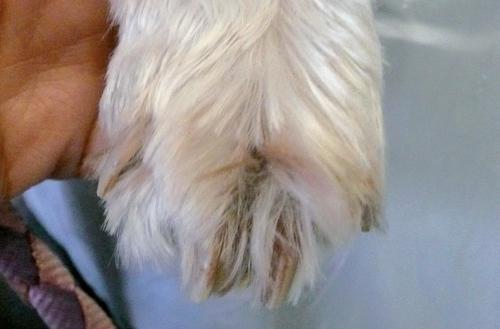
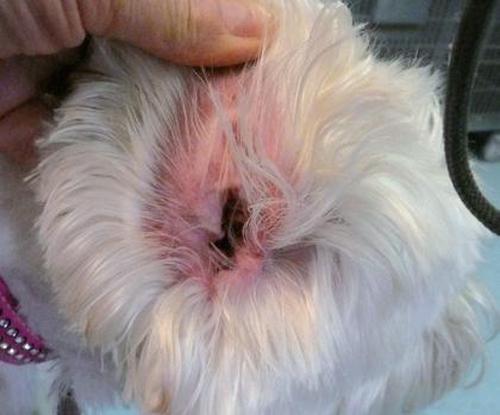
In addition to the dermatological signs, examination of the dog revealed
- Erythema of the ear pinna
- Inflammation extending into the external ear canal
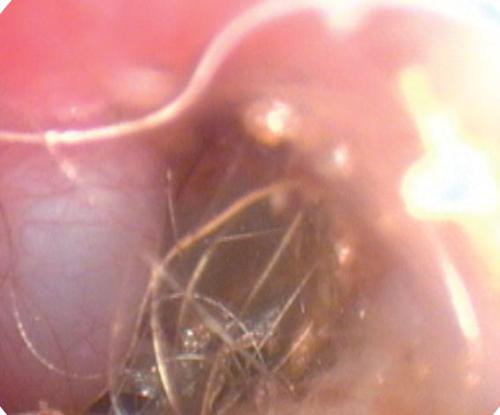
Examination of the ear canals revealed:
- Erythema and hyperplasia
- A yellow/brown purulent discharge
- Eardrum visible and intact
Diagnostic investigations
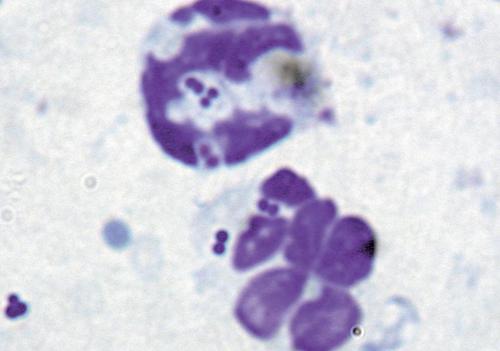
- Cytology from both ears revealed a degenerate neutrophilic infiltrate with cocci suggestive of a staphylococcal infection.
- Cultures were taken from the ear but stored pending the results of initial response to therapy.
After discussion with the owners about a potential under-lying allergic aetiology of the disease they consented to undertake some allergy investigation.
- Intradermal allergy testing demonstrated large numbers of strong positive reactions to grass and weed pollens.
Treatment
Day 1
Topical therapy
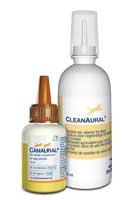
Topical therapy was started with CleanAural® Dog ear cleaner and a fusidic acid, framycetin based ear drop (Canaural,® Dechra). The owners were asked to clean the ear twice daily with ear cleaner and follow up with ear drops on each occasion.
Food trial
Despite the intradermal allergy test results a food trial was started with a commercial hydrolysed protein diet. It was suggested to the owners that if there was no response to the diet as assessed by a reduction in the more generalised saliva staining that it would be discontinued after 4 weeks. If some change was seen it would be continued for a full 9 weeks.
Day 5 – First recheck
- Examination of the ear showed it was improved
- Repeat cytology still showed evidence of bacteria (cocci) and an inflammatory infiltrate
- Therapy continued twice daily for a further 9 days
Day 14 – Second recheck
- Examination of the ear showed no evidence of ear disease
- Cytology was unremarkable
- Skin comfortable but unchanged
- Ear drops discontinued
- Diet continued
- Ear cleaner reduced to every other day
Day 30 – Third recheck
- Ear still appeared normal
- Cytology normal
- Skin comfortable but unchanged
- No response to diet so original diet reintroduced
- Ear cleaning continued but reduced to twice weekly
Outcome
A fourth recheck was made after discussion with the owner at Day 60 to coincide with the end of the pollen season. The skin and ear had improved. The dog was maintained on ear cleaner twice weekly and a recheck scheduled for two months time. The owners decided not to use a desensitising vaccine but agreed to a recheck after December at the beginning of the pollen season to pick up early disease.
Further information is available on request from:
Dechra Veterinary Products Limited, Sansaw Business Park, Hadnall, Shrewsbury, Shropshire, SY4 4AS. Tel: +44 (0)1939 211200. Fax: +44 (0)1939 211201. Dechra Veterinary Products Limited is a trading business of Dechra Pharmaceuticals PLC. Registered in England No: 5385888. www.dechra.com/timetochange Use medicines responsibly: www.noah.co.uk/responsible
